
Dental Bridges in West Roxbury, MA
Whether you need to replace a missing tooth or understand why an older bridge has become loose, painful, or damaged, Nine One Dental & Implant Center looks at the complete foundation. Our West Roxbury dental team coordinates restorative, root canal, surgical, and implant care so your plan addresses the cause as well as the visible restoration.
What is a dental bridge?
A dental bridge replaces one or more missing teeth with a connected restoration. In a traditional bridge, crowns fit over the teeth beside a gap and hold the replacement tooth, called a pontic, between them.
Porcelain bridges are designed to blend with your smile. Because a fixed bridge stays in place, you do not remove it to eat or clean your mouth.
- Fill a visible space in your smile
- Restore a surface for chewing
- Help limit shifting into the missing-tooth space
Is a dental bridge right for you?
The teeth next to a gap matter just as much as the space itself. A consultation helps determine whether they can support a bridge and how that choice fits your overall oral health.
A bridge may be worth considering if you want a fixed replacement and the neighboring teeth have adequate support. If those teeth already need crowns, your dentist can evaluate whether a bridge would address both needs.

What we consider together
- The number and location of missing teeth
- The condition of the neighboring teeth and gums
- Existing crowns, fillings, and previous bridgework
- Your bite and any grinding or clenching
- How you will clean around the finished restoration
A conventional bridge requires reshaping its supporting teeth. When those teeth are healthy, it is especially useful to discuss implant alternatives before deciding.
Different ways to support your new smile.
The main difference is what holds the bridge in place. At Nine One Dental, treatment planning can include conventional fixed bridges and implant-supported reconstruction.
Traditional fixed bridges
Neighboring teeth anchor the connected crowns and replacement tooth. A porcelain fixed bridge can restore a gap while coordinating the shade and shape with the surrounding smile.
A common traditional option is porcelain fused to metal, combining a metal foundation with a tooth-colored porcelain exterior. Your dentist will discuss the bridge type and material appropriate for your case.
Implant-supported bridges
Dental implants can provide support for a bridge when several teeth are missing or natural tooth support is inadequate. Planning includes the bone, gums, and the proposed restoration.
Implant treatment has its own surgical and healing stages. The number and position of implants are determined individually.
Explore dental implants at Nine One Dental →
Dental bridge vs. implant vs. partial denture
These treatments solve different problems. The right comparison starts with the health of your remaining teeth and the kind of replacement you want to live with.
Conventional bridge
- Support
- Crowns on neighboring natural teeth.
- Treatment considerations
- Requires preparation of the supporting teeth; implant surgery is not part of placing a conventional bridge.
- Daily care
- Clean under the replacement tooth and around the crown edges.
Implant crown or bridge
- Support
- Implants placed in the jaw support the replacement.
- Treatment considerations
- Involves surgery and healing. Adjacent teeth generally do not need crowns solely to hold the replacement.
- Daily care
- Clean around the implants and beneath any connected replacement teeth.
Partial denture
- Support
- Remaining teeth and gum tissues help support the appliance.
- Treatment considerations
- May replace teeth in several separate spaces. You take it out for cleaning.
- Daily care
- Clean the appliance separately and care for the remaining teeth and gums.
What to expect when getting a dental bridge.
A conventional fixed bridge usually takes at least two visits, with laboratory fabrication between appointments. Here is what that process involves.
Evaluate & plan
Your dentist examines the gap, supporting teeth, gums, and bite, with imaging as needed. Together, you review suitable replacement options.
Prepare & record
With the area numb, a portion of enamel is removed from the anchoring teeth to make room for crowns. An accurate impression is sent to a dental laboratory.
Create & protect
The dental laboratory fabricates your final bridge. In the meantime, you wear a temporary bridge for several weeks until your next appointment.
Fit & maintain
At the fitting visit, your dentist checks, adjusts, and cements the bridge, then provides care instructions. Temporary cement may be used first to let the teeth and tissues adjust before permanent cementation.
Two failing bridges.
Two tooth-preserving solutions.
These bridge cases from Nine One Dental & Implant Center show why the condition of the supporting teeth and gums should guide the treatment—not the appearance of the old bridge alone.
Look beneath the bridge. Preserve what is still healthy.
A chipped or aging bridge does not automatically mean the supporting teeth have failed. In both cases, the old bridge was removed, viable natural teeth were preserved, gum contours were refined, and the area was rebuilt with individual zirconia restorations.
Watch the clinical videos, then explore the full case library for the patient concern, findings, treatment details, and before-and-after images.
Failing Lower Anterior Bridge
An aging lower-front bridge had chipped porcelain and exposed metal. The natural teeth were preserved and restored individually with zirconia crowns after laser gum refinement.
View Case Details →Failing Upper Front Bridge
A worn upper-front bridge was removed while healthy natural tooth structure was maintained. Gum symmetry and individual zirconia restorations shaped the final result.
View Case Details →Care feels different when the plan makes sense.
Arthur shares his experience receiving care at Nine One Dental & Implant Center and the value of having the treatment plan explained clearly.
His experience reflects the same approach we bring to bridge care: listen first, explain the options clearly, and coordinate treatment around the person receiving it.
Different bridge problems.
Individual treatment plans.
Explore before-and-after examples of bridge replacement, individual crowns, and implant treatment. Each case shows how the condition of the existing teeth and restoration shaped the next step.
Bridge Replacement
2 cases · Before & afterReplacing a worn bridge
The old bridge showed wear, exposed metal margins, and recurrent decay. The supporting teeth were retained, and the old bridge and decay were removed before a new restoration was placed.


A new bridge for the front teeth
An older front bridge had decay around its margins and deteriorating restorations. The underlying teeth were treated, and a new bridge was made while preserving the existing teeth.


Individual Crowns
2 cases · Before & afterLower front bridge replaced with crowns
Chipped porcelain had exposed metal on an aging lower front bridge. Treatment involved removing the bridge, refining gum symmetry with laser treatment, and placing individual zirconia crowns.


Front bridge replaced with crowns
A long-standing front bridge showed wear and porcelain fractures. Our team removed it, refined the gum contours, and placed individual zirconia crowns. The final restorations in this case are individual crowns.


Implant Replacement
1 case · Before & afterNew support after a bridge failed
A fractured, infected supporting tooth left an older bridge loose. The failing bridge and compromised teeth were replaced with dental implants, followed after healing by an implant-supported restoration.


Full-Arch Treatment
3 cases · Before & afterRebuilding the lower arch
Failing lower teeth and bridgework were replaced with a full-arch implant restoration. Healthy upper teeth and implants were preserved where possible, with selected extractions and a partial denture completing the upper treatment.


Moving beyond repeated upper bridge problems
Deteriorating supporting teeth had made an upper bridge difficult to maintain. After evaluation, the remaining upper teeth were replaced with a full-arch implant-supported restoration.


Replacing an unstable upper bridge
A long upper bridge continued to lose stability after years of treatment and repairs. The failing teeth were removed, and the upper arch was rebuilt with a fixed implant-supported restoration.

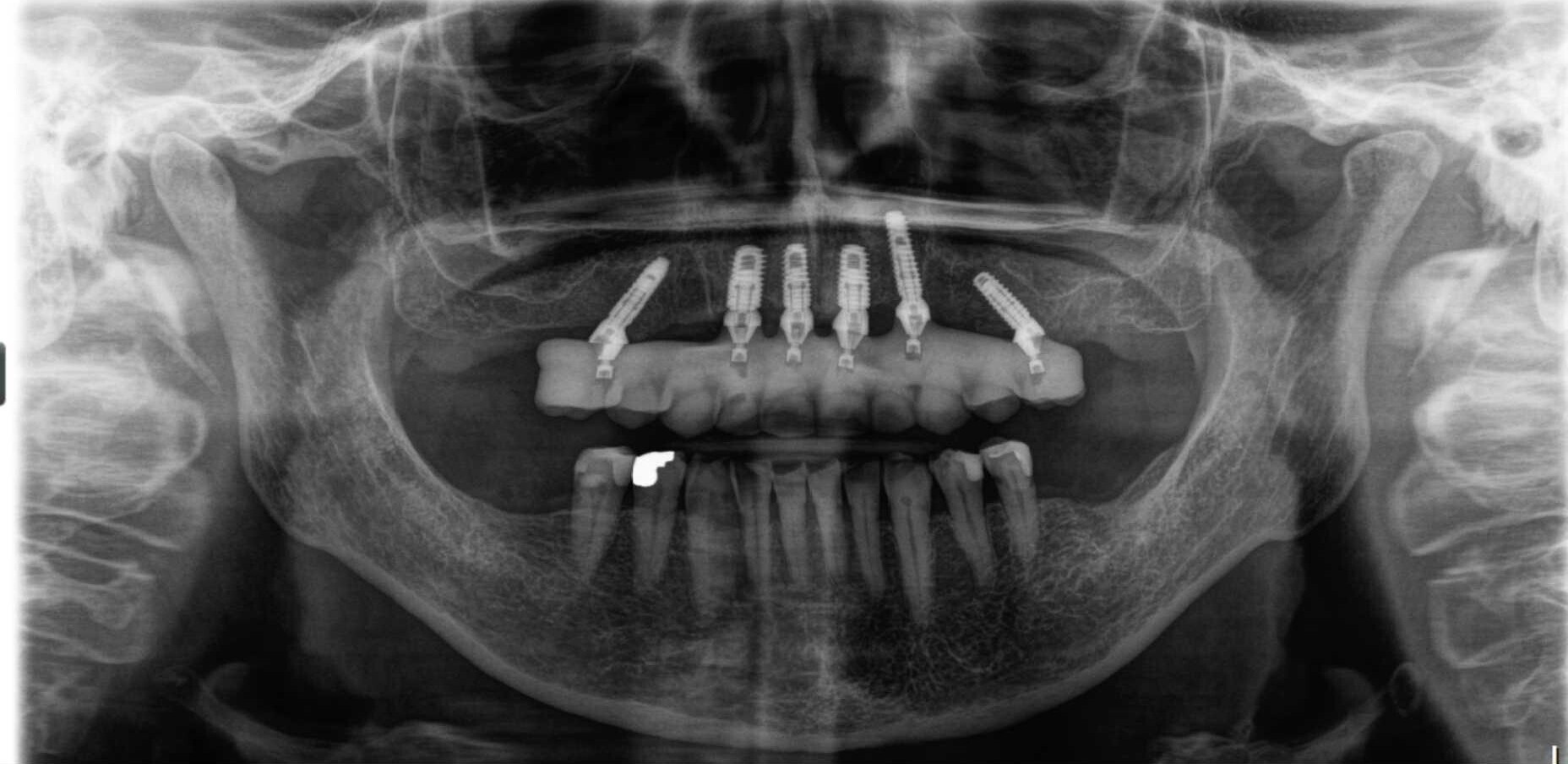
Hybrid Bridge Upgrade
1 case · Before & afterReplacing a repeatedly fractured hybrid bridge
The acrylic teeth on a full-arch implant hybrid bridge repeatedly fractured or detached. Additional implants were placed, and a new full-arch zirconia bridge was made.


Individual patient examples; treatment needs and results vary. Each tab identifies the type of treatment performed. Select a photo to view the full image.
Explore the Nine One Dental bridge case library →
A good fit needs good daily care.
The space under a replacement tooth needs attention even though the bridge stays in place. Ask your dental team to show you how to reach that area without pulling on or damaging your restoration.
If your bridge feels loose, your bite changes, or a supporting tooth becomes uncomfortable, arrange an evaluation. Finding the cause helps determine the next step.
Help for a loose or broken dental bridge →Keep the foundation healthy
- Brush your teeth and the edges of the bridge daily
- Clean underneath the connected replacement tooth
- Keep regular dental exams and cleaning visits
- Discuss grinding or clenching with your dentist
A little clarity before your visit.
From timing to cleaning, these are useful questions to bring to your consultation. Your dentist can explain how the answers apply to your mouth.
How long does a dental bridge last?
A fixed bridge can last many years with proper care, but normal wear may eventually mean it needs replacement or re-cementing. Brushing, flossing, and regular dental visits help maintain the bridge and the teeth supporting it.
Is a dental bridge or an implant better for me?
The best choice depends on what is missing and what can support the replacement. A conventional bridge may make sense when neighboring teeth also need crowns. An implant may be worth considering when those teeth are healthy and you want to avoid reshaping them. We can compare the options after an examination.
How many appointments will I need?
A conventional fixed bridge usually requires at least two visits. After tooth preparation and impressions, you wear a temporary bridge for several weeks while a dental laboratory makes the final bridge. At a later visit, your dentist checks, adjusts, and cements it. Sometimes temporary cement is used first, with permanent cementation at a subsequent visit.
Can my dental bridge be made in one day?
The conventional fixed-bridge process described here usually takes at least two visits, with a temporary bridge worn while the laboratory makes your final restoration. If you are interested in a different timeline, ask our team what is appropriate for your case. You can also visit our same-day CEREC crown page before your consultation.
How do I clean underneath a fixed bridge?
Clean around the supporting teeth and beneath the replacement tooth every day. A floss threader, bridge floss, or an appropriately sized interdental brush may help reach these spaces. Your dental team can demonstrate which method fits your bridge. Keep up with brushing and professional cleanings as well.
Can an old or broken dental bridge be replaced?
Often, yes. The first step is finding out why it failed and whether the supporting teeth are still sound. Depending on that evaluation, treatment may involve a new bridge, other restorations, or implant support. You can schedule a bridge evaluation to learn what may be appropriate for your situation.
Can a bridge replace a front tooth?
A bridge may be an option for a missing front tooth. Planning includes the shade and shape of the replacement tooth, the gumline, the bite, and the condition of the teeth next to the space. Your dentist will discuss a design that balances appearance with reliable support.
Is a fixed bridge removable?
You do not take a fixed bridge out at home. It is secured to supporting teeth or implants, and removal requires dental care. A removable partial denture is a different type of tooth replacement that you take out for cleaning.
Let’s find the right way to fill the gap.
Considering dental bridges in West Roxbury, MA? Whether you are replacing a missing tooth or rethinking an older bridge, Nine One Dental & Implant Center can evaluate the supporting teeth, gums, bite, and available treatment options.
1996 Centre Street, Suite 201, West Roxbury, MA 02132 · Welcoming patients from West Roxbury, Roslindale, Hyde Park, Mattapan, Jamaica Plain, Brookline, Newton Centre, Needham, and nearby Boston communities.